
Another month down, more progress, more “it’ll be done when it’s done.” Welcome to the October edition! This month had a lot of focus on the 1.0 game, with me getting roughly to 75% of the way through all of the level design, scripting, and the like. I’m still heavily waiting and relying on resources. Unfortunately for our artists, Scrap Metal and Sporek, I decided to go a little more grandiose in my designs/requests, so additional work got added beyond where we were at. I’ll cover that more later! There’s plenty that was added and updated in the engine this month!
This month, I added finer-grained control over tiles. You have the ability to define “sub tile colliders,” which is a fancy way of saying that you can break EACH tile quadrant into up to eight colliders, which you can add together to have all kinds of effects.
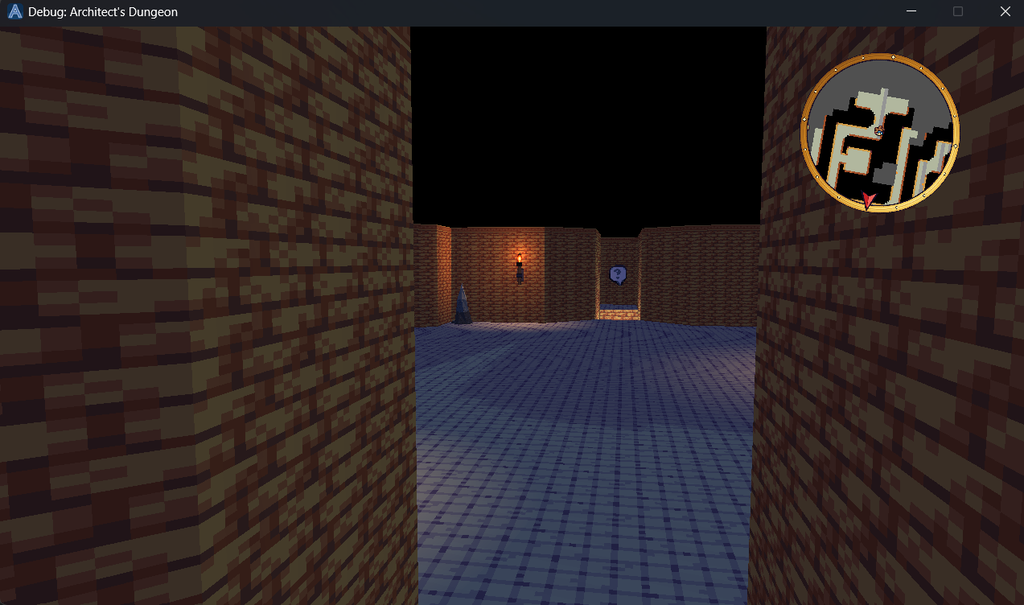
Minimaps got several updates — you now have the ability to control whether a Map Layer renders on the Minimap (which is particularly useful for Parallax layers). Minimaps also now support a “Fog of War” that can be specified/overridden/altered by Traits on characters (e.g. you could have an equipped item that may remove more Fog of War). If you want, you can even reveal/reset Fog of War on a map. I’m using it to reveal the entire map when you beat the “boss” of each stage. You’ll also notice that we now support a frame around the Minimap, which was useful for me to indicate which way “North” was in the dungeon (boy, that was confusing without it for a while).
Battle Summaries got an overhaul, as well as Gauges and Text User Interface Elements. These now support the ability to “ease” into a value. I’ve been doing this with the 1.0 project, because I wanted to show the experience a character gained slowly “add” over time — as well as show damage “subtract” over time in battle. You’ll notice that Easing Functions are now available in this, and that Battle Summary is an actual User Interface Context Provider. To get the “effect” of things adjusting in time (for battle rewards), you’ll want to make sure “Grant Rewards on Victory” in your Battle Configuration is unchecked — and then as part of your Victory User Interface (in the Loaded script) call the “Grant Battle Rewards” command. Effectively, this gets the snapshot of where you’re at before the battle — and then updates it with the menu opened. You’ll notice that this Context now provides more than it did before (before, we had to manually leverage the Data Sources to get these changes — you’ll see it in the existing Templates), with access to learning about Skills Learned/Changing, Equipment Changing, etc. Overall, it should allow you to have a nicer experience in showing post-battle statistics.
I added Easing into Lighting as well — because I wanted the 1.0 game to have a day/night cycle, where it mattered. I may write an updated tutorial on this in the future. Additionally, Parallax Layers now actually support Opacity and Blend Mode in 3D, wherein this was previously limited to 2D rendering. By having any Opacity that is non-100%, though, you’ll no longer generate shadows for that layer in the engine, due to how/when things run.
A lot of time was spent on building the 1.0 game. Last month, I reported that we were at ~45%, I believe. Now, we’re at close to 75%, in terms of scripting, dialogue implementation, battles, and all the like. The primary things missing right now are resources (e.g. monster images, character portraits, and backgrounds for cutscenes). As I had mentioned earlier, my artists were originally only asked to make “monster images” — and I kind of threw “please make these other things… and extend those portraits to include up to eight expressions…” at them). They’ve been making a valiant effort on everything thus far. I have the first four chapters done (two more are due, as well as an “epilogue” chapter — hopefully also quick, unless I ask Sporek for even more art).
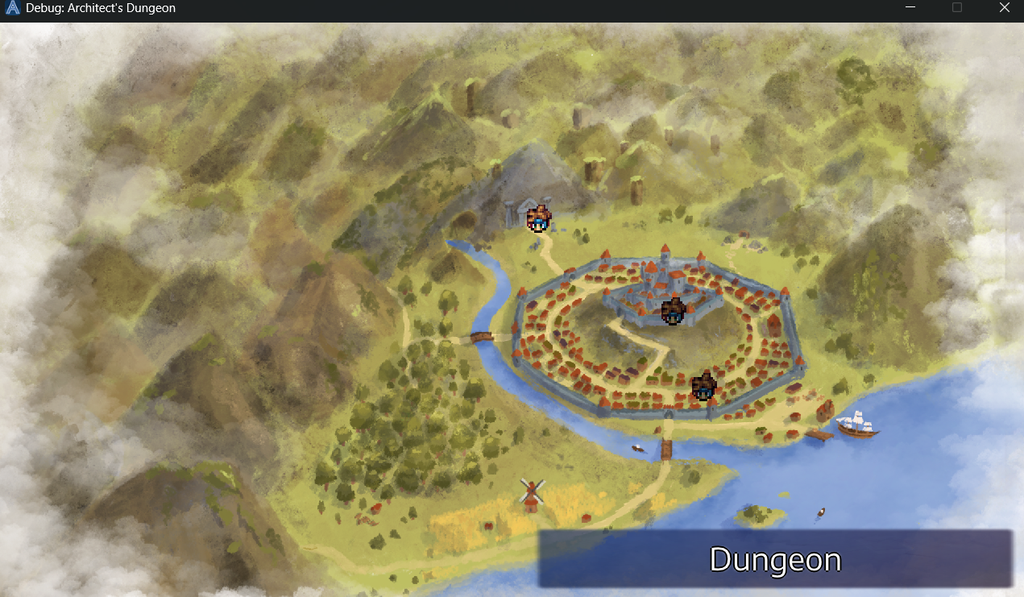
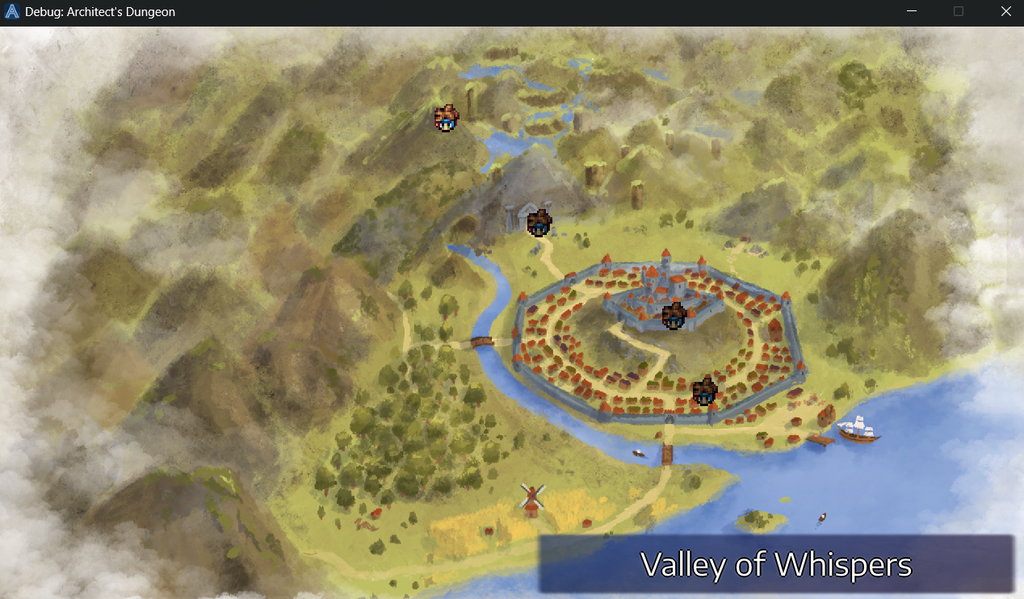
Sporek has been doing some amazing work on the world map, which is now “done.” From the above images, you should notice that the Valley of Whispers became visible on the map — the image updated, but you also see the fast-travel icon. He has been working on a lot of hand-drawn art, as well as monsters. He’ll likely be “the guy” to draw our backgrounds as well. There’s more to this world map — two more dungeons that you cannot see — and one is a very heavy spoiler, so there’s definitely a reason I won’t share it… you’ll see it eventually in the southwest corner if you play!
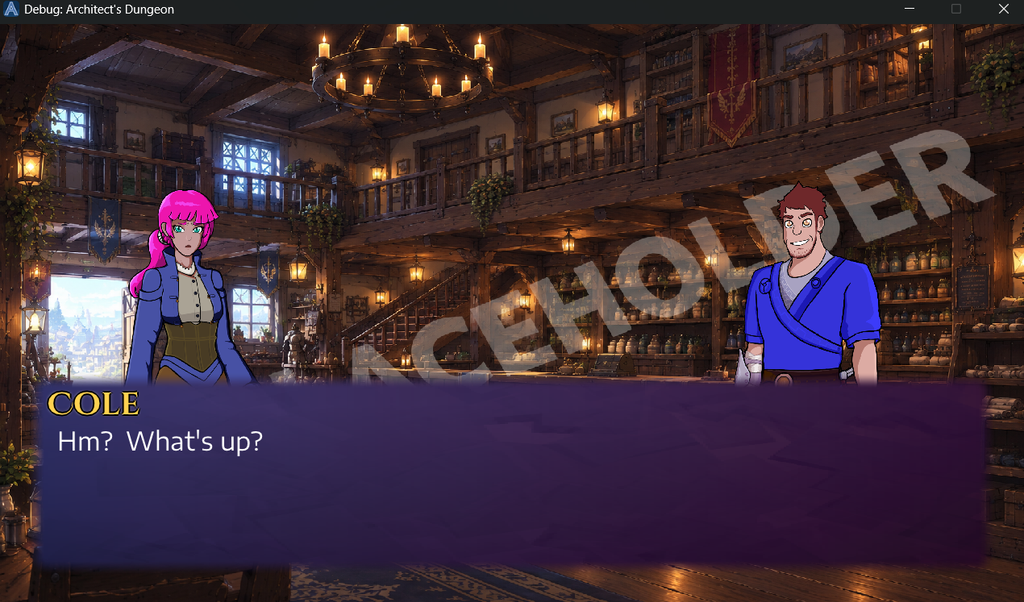
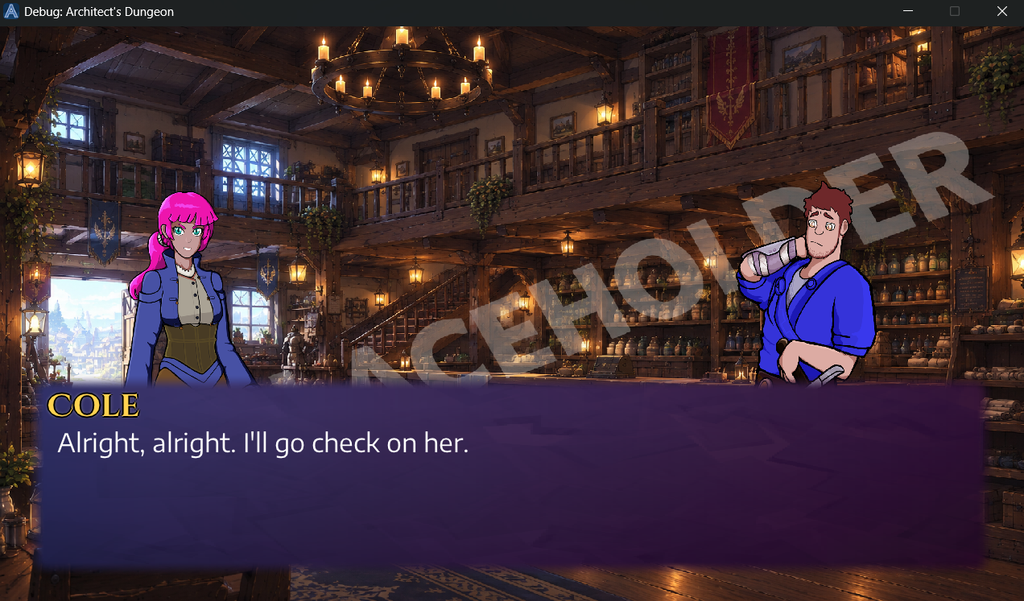
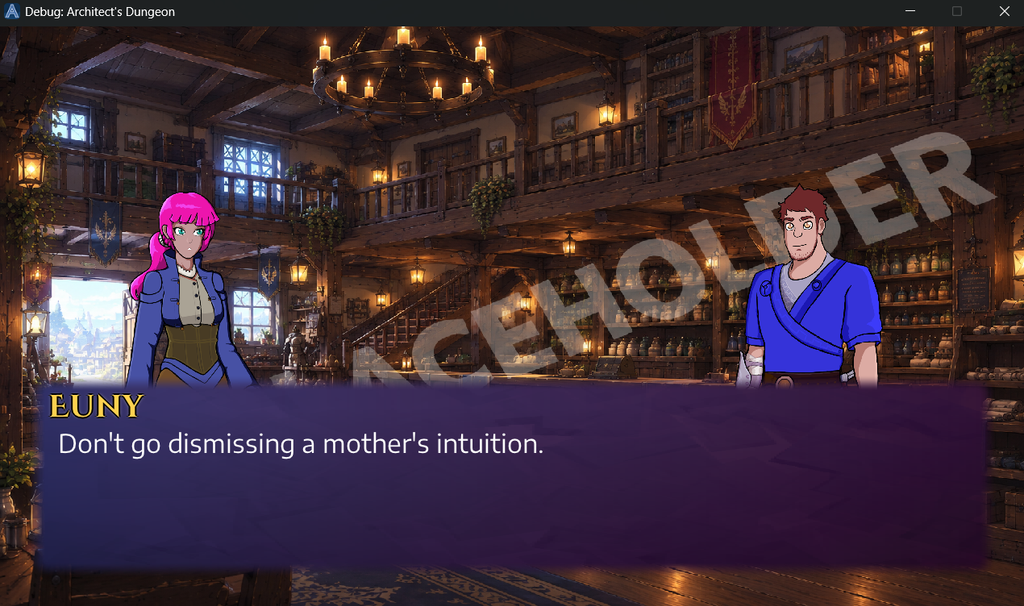
Scrap Metal has been carrying most of the monsters, as well as building all of the character portraits from their concept art. I don’t like showing off “work in progress” stuff “officially,” especially since it contains “placeholder” art that is created by AI (I’ll discuss that in a moment — let’s focus on Scrap’s work). The above is part of the initial dialogue from Chapter One (there will technically be six or seven chapters). Notice the different expressions for the characters as they discuss things. One of the very important goals for the “dungeon crawler” proof of concept was to have a visual novel-style feel to it, since some of our interactions are limited.
As a very important note. All PLACEHOLDER resources will be replaced with actual artist work. There’s a lot of hot opinions on AI and what it means. For the actual art and story, I have zero desire to have it generate anything, as I personally feel that it makes the actual “art” of game development flat and soulless. If you see a map, piece of artwork, hear audio, or read dialogue/story, know that it is all done by a Human. I have used AI to do quick run-through’s of dialogue to find inconsistency in voice and/or spelling errors, but this is the equivalent of a “spellcheck.”
A number of other updates were reworked — how prefabs in 2D (Tile) mode work (going off of the actual layers), tons of bug fixes regarding how physics/vehicles work, improvements in the 3D map editor to actually have “pixel accurate” detection (although it’s still not as good as I’d like it — but I’ll keep iterating on it), Sky Sphere support for copy/paste/etc, Blobber-style games addressing direction on teleport, and so forth. As I run through building the 1.0 game, I’m finding the things that I think could be better (and that I don’t like) and fixing them. That’s kind of the point. A number of users are also requesting features and pointing out bugs, so I’m working on those as well. Steam updates will show everything (generally) — but I think my official list from git shows around 150 bug fixes/feature adds.
November is hopefully the month that the 1.0 game is “done,” even if it’s missing resources. My goal is to have it feature complete — and then to start working on the other “styles” of games. Unfortunately, it seems like Seraph Circle animations didn’t come out this month, so that’s hopefully something to look forward to next month. My “random doodad dropper” will likely come this month as well, since I didn’t get quite as far as I was planning with the 1.0 project (or really, it will probably come just before October is “up,” but not before I’ve finished this post).
That’s a wrap for October. We’re getting closer and closer, but we’re adding more and more anyway. I’m really looking forward to 1.0. As a heads up, because I always try to be transparent — I have a few things happening in December (another certification, as well as a “family” trip), so my time will be cut a bit. I feel pretty confident that we’ll have 1.0 sometime in Q1 of 2027 at this point, if artists can keep up with the demand for the resources requested. Music won’t change, nor will animations. Presentation of maps will change, and maybe some of the user interfaces (and battles/sprites). But most of the “hard stuff” will already be done — it’ll just be presenting it in a different way — which makes things nice!
As always:
Thank you so much for your support so far. I’m looking forward to building this community further and giving you the engine you may not have known you always wanted!